|
>>
Swampland Encyclopedia
The Swampland sul-grossense it is the largest flooded plain
area of the world, forming like this with this fauna and flora
of extraordinary beauty an only ecosystem. It is a transition
area among the Amazonian forest, the savannah and the fields
open of the south. this hidrography sistem is formed by 175
rivers (tends as main the river Paraguay) and numerous ponds,
together they provide a rich habitat for a great variety of
animals and vegetables. They are approximately 720 species of
birds, 89 of mammals, 230 of fish, 52 of reptiles and a flora
quite diversified. The area of the swampland has 770 kilometers
of extension north-south, 83% belong to Brazil (in the states
of Mato Grosso and Mato Grosso do Sul) ,15% Bolivia and a small
part to Paraguay, where it receives the name of Chaco.
Their sinuous and unstable rivers and a great number of depressions
form lakes, islands and at that time of the flood the bays.
The courses that interconnect the stalls during the flood are
called of "ebb tides", and they receive the "corixos"
name when they are permanent and they can be navigated even
at that time more drought. The rain period that is going from
December to May is responsible directly for the constant renewal
of the life, nutrients are brought by the water fertilizing
the pastures for the cattle and feeding the shoals that attract
the fishermen, transforming the area in a rich concentration
of natural foods that sustain the fauna and the flora.
The area of the Swampland is considered one of the most important
of the continent for the aquatic birds, with great "tuiuius"
population, "biguás" herons,"colhereiros"
and ducks of several species. Deer of the swampland, rural deer,
wild deer, jaws, litle wolves , anteaters and armadillos are
seen without larger difficulty. Even threatened animals of extinction
as the painted ounce, the otter and the "ariranha"
are still seen at the place. But the most evident animal is
the alligator.
The Swampland is an immense flooded plain in constant movement,
varying with the flood times and drought, and four is the factors
that influence this formation: the geography, the soil, the
great number of rivers and the formations that involves it.
That area is plane, with altitudes that don't cross the 200
meter above the sea level and with an almost null steepness
favoring the floods along the river Paraguay, the only canal
of the Swampland. Surrounded by the Brazilian Plateau to east
and for the Cordillera of Andes to west, these areas end up
disemboguing at that time of the flood or of their thaw waters
in the Swampland, this does with that soil rich in clay impeding
the absorption of the water.
The Swampland sul-grossense for the great variety of this fauna
and flora was declared by UNESCO reserves of the biosphere,
starting to integrate the collection of the humanity's patrimonies.
With that it has discussed the impact of the human occupation
in this area. The main outstanding problems were: the predatory
fishing, the pollution of the rivers of the basin of Paraguay
and the mines.
this beauty attracts visitors of the whole world, turning the
very important ecological tourism for the area. The Abundance
and variety of fish of the river Paraguay does a great economical
activity of the fishing with the agriculture (soy, corn, cotton,
rice and sugarcane) the livestock and creation, the mining (iron,
manganese and limestone) and it elaborates her (Nutritious,
of cement and of mining).
Volta ao topo
|
Links Interessantes
- "Dequada"

The Swampland Fauna

The Swampland Man

The Swampland Hidrography
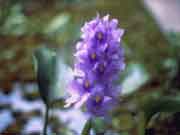
The Swampland Flora
|
|


